 By admin
Intro to Water-Based Zinc Stearate: Connecting Performance and Sustainability in Modern Production
Water-based zinc stearate is an environmentally friendly choice to solvent-based lubricants and release representatives, using remarkable efficiency with minimal environmental effect. As industries change toward greener production techniques, this liquid diffusion of zinc stearate has acquired prominence throughout industries such as rubber processing, metal developing, concrete spreading, and polymer manufacturing. Its ability to give reliable lubrication, stop adhesion, and lower surface defects makes it a flexible device in modern-day industrial applications. With growing regulative pressure on unpredictable organic substance (VOC) emissions, water-based zinc stearate sticks out as a clean, effective, and scalable option.
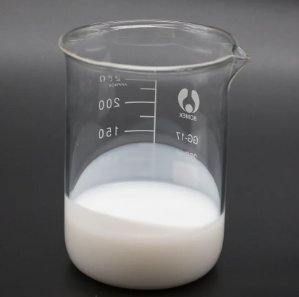
(TRUNNANO Water Based Zinc Stearate)
Chemical Composition and Practical Device
Zinc stearate is a metal soap created by the response of stearic acid with zinc oxide or zinc salts. In its water-based formulation, it is normally spread utilizing surfactants or emulsifiers to ensure stability and uniform application. When applied to surfaces, the zinc stearate particles form a slim, hydrophobic movie that lowers rubbing and avoids direct get in touch with between products. This device is crucial in mold and mildew launch operations, where it helps with very easy demolding without harming the end product’s surface area stability. In addition, its high melting factor (~ 120– 130 ° C) allows it to carry out efficiently under moderate thermal conditions, preserving functionality during high-temperature processes.
Applications in Rubber and Polymer Processing
In rubber manufacturing, water-based zinc stearate serves dual functions– as a mold and mildew launch agent and as an interior lubricating substance. It protects against sticking in between uncured rubber substances and mold and mildew surface areas, ensuring consistent part high quality and minimizing post-processing efforts. In thermoplastics and elastomers, it improves flow residential properties throughout extrusion and shot molding, lessening pass away accumulation and enhancing surface coating. Its compatibility with different polymers, including polyolefins, PVC, and design resins, even more expands its energy. Furthermore, its non-reactive nature ensures it does not interfere with healing or vulcanization responses, protecting material efficiency characteristics.
Role in Steel Forming and Stamping Industries
The metalworking market significantly counts on water-based zinc stearate for cool and cozy forming procedures. Used as a lubricant in stamping, drawing, and forging, it develops a protective limit layer that reduces device wear and improves component surface quality. Compared to oil-based or wax finishes, it offers better warm dissipation and cleaner procedure, which is particularly advantageous in computerized assembly line. In addition, its ease of elimination after processing– using easy water rinsing or mild cleaning agents– lowers cleansing costs and prevents residue build-up on completed elements. This makes it excellent for use in automotive, aerospace, and accuracy component manufacturing.
Use in Concrete and Building Products
Within the construction sector, water-based zinc stearate is extensively used as an interior launch representative for precast concrete elements. Unlike traditional oil-based products, it does not tarnish surfaces or disrupt secondary therapies like paint or layer. When mixed right into concrete or applied to formwork, it stops bonding in between the mold and mildew and the hardened concrete, allowing for simple demolding while keeping dimensional precision. Its reduced thickness enables even protection with spraying or cleaning, making it ideal for both hands-on and mechanized procedures. In addition, it contributes to longer mold and mildew life by safeguarding versus chemical strike and abrasion from duplicated casting cycles.
Environmental and Safety Advantages Over Traditional Alternatives
Among one of the most engaging advantages of water-based zinc stearate is its ecological profile. Without solvents, VOCs, and hazardous ingredients, it straightens with worldwide sustainability objectives and occupational health and wellness standards. Workers gain from reduced direct exposure to flammable or harmful materials, and suppliers can meet stringent air high quality guidelines without extra ventilation systems. From a waste monitoring point of view, water-based formulas are much easier to handle and deal with securely, sustaining round economic situation techniques. These qualities make it a preferred selection for business aiming to accomplish eco-friendly qualifications such as ISO 14001 or LEED compliance.
Market Fads and Technological Innovations
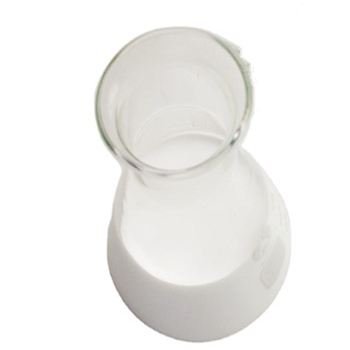
( TRUNNANO Water Based Zinc Stearate )
The marketplace for water-based zinc stearate is experiencing consistent growth, driven by raising demand for green industrial remedies and stricter environmental legislation. Manufacturers are investing in sophisticated dispersion innovations to improve stability, extend shelf life, and enhance efficiency under severe problems. Advancements such as nano-dispersed zinc stearate and crossbreed solutions with silicone or PTFE are being checked out to offer premium lubricity and temperature level resistance. Furthermore, smart delivery systems– consisting of atomized sprays and application units integrated with IoT– are enabling accurate application control, lowering consumption and operational prices.
Difficulties and Ongoing Study Instructions
In spite of its benefits, water-based zinc stearate faces certain constraints, consisting of level of sensitivity to water hardness, prospective microbial degradation, and reduced load-bearing ability contrasted to synthetic lubes. To address these issues, recurring research focuses on enhancing solution security, incorporating biocides for microbial resistance, and boosting useful performance via additive harmonies. Compatibility with different substratums and procedure problems additionally continues to be a key area of advancement. Initiatives are underway to tailor formulations for details applications, making sure consistent performance across varied industrial settings.
Future Leads: Assimilation with Smart Production and Environment-friendly Chemistry
Looking in advance, water-based zinc stearate is poised to play a central function in the change towards intelligent and sustainable manufacturing. Its combination with Sector 4.0 modern technologies– such as real-time surveillance, anticipating maintenance, and automated dispensing– will certainly enable a lot more effective and flexible production process. Advances in bio-based surfactants and eco-friendly feedstocks will better boost its environmental credentials, supporting decarbonization strategies throughout supply chains. As industries remain to prioritize source efficiency and environmental stewardship, water-based zinc stearate represents a strategic technology that balances technological efficiency with environmental responsibility.
Distributor
TRUNNANO is a supplier of water based zinc stearate with over 12 years of experience in nano-building energy conservation and nanotechnology development. It accepts payment via Credit Card, T/T, West Union and Paypal. Trunnano will ship the goods to customers overseas through FedEx, DHL, by air, or by sea. If you want to know more about zinc stearate price, please feel free to contact us and send an inquiry(sales5@nanotrun.com).
Tags: water based zinc stearate, zinc stearate, zn stearate
All articles and pictures are from the Internet. If there are any copyright issues, please contact us in time to delete.
Inquiry us