 By admin
1. Basic Qualities and Crystallographic Variety of Silicon Carbide
1.1 Atomic Framework and Polytypic Intricacy
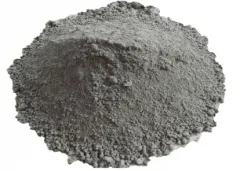
(Silicon Carbide Powder)
Silicon carbide (SiC) is a binary compound made up of silicon and carbon atoms organized in an extremely secure covalent lattice, differentiated by its phenomenal solidity, thermal conductivity, and digital residential properties.
Unlike traditional semiconductors such as silicon or germanium, SiC does not exist in a solitary crystal structure but shows up in over 250 distinct polytypes– crystalline forms that differ in the piling series of silicon-carbon bilayers along the c-axis.
The most technologically relevant polytypes consist of 3C-SiC (cubic, zincblende structure), 4H-SiC, and 6H-SiC (both hexagonal), each showing subtly different electronic and thermal qualities.
Among these, 4H-SiC is specifically favored for high-power and high-frequency electronic tools due to its higher electron movement and lower on-resistance compared to various other polytypes.
The solid covalent bonding– comprising roughly 88% covalent and 12% ionic personality– confers amazing mechanical toughness, chemical inertness, and resistance to radiation damages, making SiC ideal for operation in severe atmospheres.
1.2 Electronic and Thermal Attributes
The digital supremacy of SiC originates from its large bandgap, which ranges from 2.3 eV (3C-SiC) to 3.3 eV (4H-SiC), dramatically bigger than silicon’s 1.1 eV.
This vast bandgap makes it possible for SiC devices to run at much higher temperature levels– up to 600 ° C– without intrinsic provider generation frustrating the device, a critical restriction in silicon-based electronic devices.
Additionally, SiC has a high essential electric field stamina (~ 3 MV/cm), around 10 times that of silicon, permitting thinner drift layers and greater break down voltages in power tools.
Its thermal conductivity (~ 3.7– 4.9 W/cm · K for 4H-SiC) surpasses that of copper, assisting in effective warmth dissipation and reducing the requirement for complex air conditioning systems in high-power applications.
Combined with a high saturation electron rate (~ 2 × 10 seven cm/s), these buildings make it possible for SiC-based transistors and diodes to switch over faster, deal with greater voltages, and run with better energy efficiency than their silicon equivalents.
These attributes jointly place SiC as a fundamental product for next-generation power electronics, particularly in electric cars, renewable energy systems, and aerospace innovations.
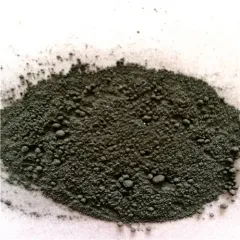
( Silicon Carbide Powder)
2. Synthesis and Construction of High-Quality Silicon Carbide Crystals
2.1 Bulk Crystal Development via Physical Vapor Transportation
The manufacturing of high-purity, single-crystal SiC is among one of the most difficult aspects of its technical implementation, mainly because of its high sublimation temperature level (~ 2700 ° C )and intricate polytype control.
The leading technique for bulk development is the physical vapor transportation (PVT) strategy, also called the changed Lely method, in which high-purity SiC powder is sublimated in an argon atmosphere at temperatures exceeding 2200 ° C and re-deposited onto a seed crystal.
Precise control over temperature gradients, gas flow, and pressure is necessary to lessen defects such as micropipes, dislocations, and polytype additions that degrade tool performance.
Despite advances, the growth rate of SiC crystals stays sluggish– commonly 0.1 to 0.3 mm/h– making the procedure energy-intensive and expensive compared to silicon ingot production.
Continuous research concentrates on maximizing seed alignment, doping harmony, and crucible layout to enhance crystal quality and scalability.
2.2 Epitaxial Layer Deposition and Device-Ready Substrates
For electronic tool fabrication, a slim epitaxial layer of SiC is expanded on the bulk substratum utilizing chemical vapor deposition (CVD), generally using silane (SiH ₄) and gas (C FOUR H ₈) as precursors in a hydrogen environment.
This epitaxial layer has to display accurate density control, reduced issue density, and tailored doping (with nitrogen for n-type or light weight aluminum for p-type) to develop the active regions of power gadgets such as MOSFETs and Schottky diodes.
The lattice inequality in between the substratum and epitaxial layer, together with recurring anxiety from thermal expansion differences, can present stacking mistakes and screw misplacements that impact tool dependability.
Advanced in-situ tracking and procedure optimization have significantly lowered problem densities, allowing the commercial production of high-performance SiC tools with lengthy operational lifetimes.
Moreover, the advancement of silicon-compatible handling strategies– such as completely dry etching, ion implantation, and high-temperature oxidation– has helped with combination right into existing semiconductor manufacturing lines.
3. Applications in Power Electronics and Energy Equipment
3.1 High-Efficiency Power Conversion and Electric Movement
Silicon carbide has ended up being a keystone product in modern-day power electronic devices, where its capability to change at high regularities with very little losses translates right into smaller sized, lighter, and much more efficient systems.
In electric lorries (EVs), SiC-based inverters transform DC battery power to AC for the electric motor, running at frequencies approximately 100 kHz– considerably greater than silicon-based inverters– decreasing the size of passive elements like inductors and capacitors.
This brings about raised power density, prolonged driving array, and boosted thermal administration, straight dealing with key obstacles in EV style.
Significant auto makers and vendors have actually taken on SiC MOSFETs in their drivetrain systems, accomplishing power financial savings of 5– 10% compared to silicon-based services.
In a similar way, in onboard battery chargers and DC-DC converters, SiC gadgets enable much faster billing and higher efficiency, speeding up the shift to lasting transport.
3.2 Renewable Resource and Grid Infrastructure
In photovoltaic (PV) solar inverters, SiC power modules boost conversion performance by lowering switching and conduction losses, especially under partial tons problems usual in solar power generation.
This renovation raises the total power yield of solar installments and minimizes cooling needs, decreasing system costs and boosting dependability.
In wind turbines, SiC-based converters handle the variable regularity output from generators a lot more efficiently, allowing better grid integration and power high quality.
Past generation, SiC is being deployed in high-voltage straight existing (HVDC) transmission systems and solid-state transformers, where its high malfunction voltage and thermal stability support small, high-capacity power delivery with minimal losses over fars away.
These developments are crucial for modernizing aging power grids and suiting the expanding share of distributed and intermittent renewable sources.
4. Emerging Roles in Extreme-Environment and Quantum Technologies
4.1 Procedure in Harsh Conditions: Aerospace, Nuclear, and Deep-Well Applications
The toughness of SiC expands beyond electronics right into environments where traditional products stop working.
In aerospace and defense systems, SiC sensors and electronics operate reliably in the high-temperature, high-radiation problems near jet engines, re-entry lorries, and room probes.
Its radiation hardness makes it suitable for atomic power plant surveillance and satellite electronics, where direct exposure to ionizing radiation can weaken silicon gadgets.
In the oil and gas market, SiC-based sensors are made use of in downhole exploration devices to hold up against temperatures surpassing 300 ° C and corrosive chemical settings, allowing real-time information purchase for boosted removal effectiveness.
These applications take advantage of SiC’s capacity to preserve architectural integrity and electrical functionality under mechanical, thermal, and chemical stress.
4.2 Assimilation into Photonics and Quantum Sensing Platforms
Beyond timeless electronic devices, SiC is emerging as a promising system for quantum innovations because of the visibility of optically active factor issues– such as divacancies and silicon vacancies– that exhibit spin-dependent photoluminescence.
These flaws can be adjusted at area temperature, serving as quantum little bits (qubits) or single-photon emitters for quantum communication and sensing.
The wide bandgap and reduced innate carrier concentration enable long spin comprehensibility times, essential for quantum information processing.
In addition, SiC works with microfabrication techniques, enabling the combination of quantum emitters into photonic circuits and resonators.
This combination of quantum capability and industrial scalability placements SiC as an unique material linking the void in between essential quantum science and functional tool engineering.
In recap, silicon carbide stands for a standard shift in semiconductor technology, using unparalleled performance in power efficiency, thermal management, and ecological strength.
From making it possible for greener power systems to supporting exploration precede and quantum realms, SiC continues to redefine the limits of what is technically feasible.
Supplier
RBOSCHCO is a trusted global chemical material supplier & manufacturer with over 12 years experience in providing super high-quality chemicals and Nanomaterials. The company export to many countries, such as USA, Canada, Europe, UAE, South Africa, Tanzania, Kenya, Egypt, Nigeria, Cameroon, Uganda, Turkey, Mexico, Azerbaijan, Belgium, Cyprus, Czech Republic, Brazil, Chile, Argentina, Dubai, Japan, Korea, Vietnam, Thailand, Malaysia, Indonesia, Australia,Germany, France, Italy, Portugal etc. As a leading nanotechnology development manufacturer, RBOSCHCO dominates the market. Our professional work team provides perfect solutions to help improve the efficiency of various industries, create value, and easily cope with various challenges. If you are looking for mersen sic, please send an email to: sales1@rboschco.com
Tags: silicon carbide,silicon carbide mosfet,mosfet sic
All articles and pictures are from the Internet. If there are any copyright issues, please contact us in time to delete.
Inquiry us