 By admin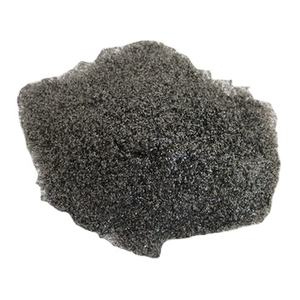
Introduction to 3D Printing Metal Powder
Additive production, especially steel 3D printing, has actually changed the landscape of modern-day commercial production. At the heart of this technical change lies 3D printing steel powder– a high-performance product that makes it possible for the development of facility, high-strength parts across industries such as aerospace, health care, auto, and energy. With its capability to create near-net-shape get rid of very little waste, metal powder is not just a raw material however a crucial enabler of next-generation design remedies. This short article looks into the properties, preparation approaches, existing applications, and future trajectories of 3D printing steel powders.

(3d printing alloy powder)
Make-up and Quality of 3D Printing Steel Powders
Metal powders used in additive production are typically composed of alloys like titanium, stainless steel, cobalt-chrome, light weight aluminum, and nickel-based superalloys. These powders must fulfill rigorous requirements, including round morphology, narrow bit size distribution (normally between 10– 50 µm), reduced oxygen content, and high flowability to make certain constant layer deposition and optimal thaw behavior during laser or electron beam of light melting processes.
The microstructure and purity of the powder directly affect the mechanical stability and surface area coating of the last printed component. As an example, gas-atomized powders are extensively favored for their clean, round particles, which improve packing thickness and minimize porosity. As 3D printing progressively targets crucial applications such as aerospace wind turbine blades and clinical implants, the need for ultra-pure, high-performance steel powders continues to surge.
Prep Work Methods and Technical Innovations
Producing high-quality metal powders entails sophisticated methods such as gas atomization, plasma atomization, and electro-slag remelting. Gas atomization remains the most common method, where liquified steel is disintegrated utilizing high-pressure inert gas jets, creating fine, round bits. Plasma atomization provides even finer control over particle morphology and is especially efficient for reactive metals like titanium and tantalum.
Current advancements have focused on enhancing yield, minimizing contamination, and tailoring powder qualities for certain printing innovations such as Careful Laser Melting (SLM) and Electron Light Beam Melting (EBM). Arising techniques like ultrasonic-assisted atomization and laser-induced onward transfer are being explored to achieve higher precision and reduced manufacturing expenses. Additionally, recycling and reconditioning of made use of powders are getting grip to support sustainable manufacturing methods.
Applications Throughout Secret Industrial Sectors
The fostering of 3D printing steel powders has actually seen exponential development because of their unique ability to make light-weight, lattice-structured, and topology-optimized parts. In aerospace, companies like GE Aeronautics and Plane make use of titanium and nickel-based powders to publish fuel nozzles and turbine blades with boosted thermal resistance and weight decrease. In the clinical area, personalized orthopedic implants made from titanium alloys use remarkable biocompatibility and osseointegration contrasted to conventional prosthetics.
The automobile market leverages steel powders to create intricate engine parts and air conditioning channels unreachable through traditional machining. Meanwhile, the power industry take advantage of corrosion-resistant elements for oil and gas expedition and nuclear reactors. Also in deluxe markets like precious jewelry and watchmaking, rare-earth element powders enable elaborate designs that were when difficult to manufacture. These diverse applications underline the transformative capacity of 3D printing metal powders across both high-tech and day-to-day sectors.
Market Trends and Growth Drivers
Global need for 3D printing steel powders is growing rapidly, driven by innovations in additive production innovations and increasing approval across end-user sectors. According to market evaluation records, the international metal powder market for additive production is predicted to go beyond USD 4 billion by 2030. This development is fueled by elements such as rising investment in R&D, expansion of commercial 3D printing capacities, and the need for local, on-demand manufacturing solutions.
Federal government efforts promoting digital production and Market 4.0 are additionally contributing to market energy. Companies are spending heavily in automation, AI-integrated quality assurance systems, and real-time monitoring of powder efficiency. Joint ventures between product vendors, OEMs, and academic institutions are increasing technology cycles, bringing brand-new products and applications to market quicker than ever before.
Obstacles and Ecological Considerations
Despite its encouraging trajectory, the prevalent use of 3D printing metal powder is not without difficulties. High product and tools prices continue to be an obstacle to access for little and medium business. Powder handling, storage space, and safety and security protocols need stringent adherence as a result of threats connected with explosion and breathing threats. In addition, concerns like batch-to-batch uniformity, oxidation level of sensitivity, and minimal standardization position technical hurdles.
Environmental issues additionally loom large. The production of steel powders is energy-intensive, typically entailing high-temperature handling and unusual planet aspects. There is an urgent requirement to develop greener alternatives, improve powder recyclability, and execute closed-loop systems that reduce waste and discharges. Some companies are checking out hydrogen-based sintering and renewable energy-powered manufacturing units to line up with circular economy principles and global sustainability goals.
Future Leads: Innovation and Strategic Advancement

(3d printing alloy powder)
Looking in advance, the future of 3D printing steel powders is positioned for groundbreaking growths. Advancements in nanotechnology can cause the development of nanostructured powders with unprecedented stamina and thermal resistance. Crossbreed manufacturing comes close to integrating 3D printing with CNC machining and cool spray are opening up doors to a lot more functional, economical manufacturing process.
Furthermore, the integration of expert system and machine learning in powder choice and process optimization is expected to boost dependability and decrease experimental trial and error. New alloy development tailored especially for additive manufacturing will further broaden the variety of printable materials, allowing residential or commercial properties such as shape memory, self-healing, and bio-functionality.
Collective ecosystems among worldly scientists, manufacturers, and policymakers will certainly be essential in shaping governing requirements, education programs, and international supply chains. As 3D printing remains to evolve from prototyping to major manufacturing, metal powders will stay at the center of this industrial transformation– driving technology, performance, and sustainability across the globe.
Supplier
TRUNNANO is a supplier of boron nitride with over 12 years of experience in nano-building energy conservation and nanotechnology development. It accepts payment via Credit Card, T/T, West Union and Paypal. Trunnano will ship the goods to customers overseas through FedEx, DHL, by air, or by sea. If you want to know more about potassium silicate, please feel free to contact us and send an inquiry(sales5@nanotrun.com).
Tags: 3d printing, 3d printing metal powder, powder metallurgy 3d printing
All articles and pictures are from the Internet. If there are any copyright issues, please contact us in time to delete.
Inquiry us