 By admin
1. Basics of Foam Generation and the Function in Lightweight Concrete Equipment
1.1 Principles of Air Entrainment and Mobile Structure Development

(Lightweight Concrete Foam Generators)
Lightweight concrete, a course of building materials identified by lowered density and improved thermal insulation, relies essentially on the regulated intro of air or gas spaces within a cementitious matrix– a process known as lathering.
The development of these consistently dispersed, stable air cells is attained with making use of a specialized tool referred to as a foam generator, which generates fine, microscale bubbles that are ultimately blended into the concrete slurry.
These bubbles, usually ranging from 50 to 500 micrometers in size, end up being permanently entrained upon concrete hydration, causing a cellular concrete framework with significantly reduced device weight– often in between 300 kg/m four and 1,800 kg/m FIVE– contrasted to standard concrete (~ 2,400 kg/m FOUR).
The foam generator is not just a complementary device yet an important engineering component that establishes the quality, uniformity, and efficiency of the final lightweight concrete item.
The procedure starts with a fluid lathering agent, typically a protein-based or artificial surfactant service, which is presented right into the generator where it is mechanically or pneumatically spread into a dense foam through high shear or pressed air shot.
The stability and bubble dimension circulation of the produced foam directly influence essential material residential or commercial properties such as compressive strength, thermal conductivity, and workability.
1.2 Classification and Functional Mechanisms of Foam Generators
Foam generators are broadly categorized into three key types based upon their operational principles: low-pressure (or wet-film), high-pressure (or vibrant), and rotary (or centrifugal) systems.
Low-pressure generators use a porous medium– such as a fine mesh, material, or ceramic plate– through which compressed air is compelled, producing bubbles as the lathering remedy flows over the surface area.
This method produces fairly large, less consistent bubbles and is normally utilized for lower-grade applications where accurate control is less essential.
High-pressure systems, on the other hand, use a nozzle-based design where a high-velocity stream of compressed air shears the foaming liquid right into a penalty, uniform foam with slim bubble dimension circulation.
These systems offer exceptional control over foam density and stability, making them perfect for structural-grade lightweight concrete and precast applications.
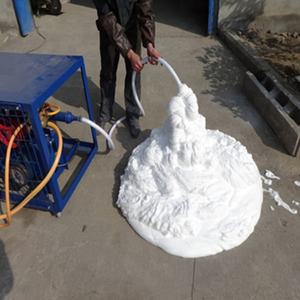
( Lightweight Concrete Foam Generators)
Rotating foam generators utilize a spinning disk or drum that flings the foaming service into a stream of air, creating bubbles via mechanical diffusion.
While much less specific than high-pressure systems, rotating generators are valued for their effectiveness, convenience of upkeep, and continuous output, appropriate for massive on-site pouring operations.
The choice of foam generator type relies on project-specific requirements, including preferred concrete thickness, manufacturing volume, and efficiency requirements.
2. Product Science Behind Foam Stability and Concrete Efficiency
2.1 Foaming Representatives and Interfacial Chemistry
The effectiveness of a foam generator is inherently connected to the chemical structure and physical actions of the foaming agent.
Lathering representatives are surfactants that decrease the surface stress of water, making it possible for the formation of secure air-liquid interfaces.
Protein-based representatives, originated from hydrolyzed keratin or albumin, create long lasting, flexible foam films with excellent stability and are often favored in structural applications.
Synthetic agents, such as alkyl sulfonates or ethoxylated alcohols, supply faster foam generation and reduced price yet may generate much less steady bubbles under long term mixing or unfavorable ecological problems.
The molecular structure of the surfactant establishes the thickness and mechanical toughness of the lamellae (slim fluid films) bordering each bubble, which must resist coalescence and drain throughout mixing and treating.
Additives such as viscosity modifiers, stabilizers, and pH buffers are commonly integrated right into lathering services to boost foam determination and compatibility with cement chemistry.
2.2 Impact of Foam Characteristics on Concrete Residence
The physical features of the generated foam– bubble size, dimension circulation, air web content, and foam thickness– directly dictate the macroscopic actions of lightweight concrete.
Smaller sized, evenly dispersed bubbles enhance mechanical strength by decreasing anxiety concentration factors and developing an extra uniform microstructure.
On the other hand, bigger or uneven bubbles can act as problems, decreasing compressive stamina and enhancing permeability.
Foam stability is equally vital; premature collapse or coalescence throughout mixing result in non-uniform density, segregation, and minimized insulation performance.
The air-void system additionally affects thermal conductivity, with finer, closed-cell frameworks offering exceptional insulation because of entraped air’s low thermal diffusivity.
In addition, the water web content of the foam affects the water-cement ratio of the last mix, demanding exact calibration to prevent weakening the concrete matrix or postponing hydration.
Advanced foam generators currently include real-time tracking and responses systems to keep constant foam outcome, ensuring reproducibility throughout batches.
3. Assimilation in Modern Construction and Industrial Applications
3.1 Structural and Non-Structural Uses Foamed Concrete
Lightweight concrete created via foam generators is used across a broad range of building applications, varying from insulation panels and void loading to load-bearing walls and sidewalk systems.
In structure envelopes, frothed concrete provides excellent thermal and acoustic insulation, adding to energy-efficient layouts and minimized a/c lots.
Its low density additionally decreases structural dead tons, permitting smaller structures and longer spans in skyscraper and bridge building and construction.
In civil engineering, it is used for trench backfilling, tunneling, and slope stabilization, where its self-leveling and low-stress qualities protect against ground disturbance and enhance security.
Precast producers use high-precision foam generators to create light-weight blocks, panels, and architectural aspects with limited dimensional tolerances and regular quality.
Additionally, foamed concrete displays inherent fire resistance because of its reduced thermal conductivity and lack of organic parts, making it appropriate for fire-rated assemblies and easy fire defense systems.
3.2 Automation, Scalability, and On-Site Manufacturing Systems
Modern building and construction needs quick, scalable, and trusted manufacturing of light-weight concrete, driving the integration of foam generators into computerized batching and pumping systems.
Fully automated plants can integrate foam generation with concrete mixing, water dosing, and additive shot, making it possible for constant production with marginal human intervention.
Mobile foam generator systems are progressively released on building sites, permitting on-demand manufacture of foamed concrete directly at the factor of usage, decreasing transportation costs and product waste.
These systems are usually geared up with electronic controls, remote tracking, and information logging capacities to guarantee conformity with design specs and top quality criteria.
The scalability of foam generation innovation– from little mobile devices to industrial-scale systems– sustains its adoption in both established and arising markets, promoting sustainable structure practices internationally.
4. Technical Advancements and Future Directions in Foam Generation
4.1 Smart Foam Generators and Real-Time Refine Control
Emerging innovations in foam generator style concentrate on improving accuracy, efficiency, and versatility through digitalization and sensor integration.
Smart foam generators equipped with pressure sensors, circulation meters, and optical bubble analyzers can dynamically adjust air-to-liquid proportions and monitor foam top quality in real time.
Artificial intelligence formulas are being checked out to predict foam habits based upon environmental problems, resources variations, and historic performance data.
Such developments intend to reduce batch-to-batch variability and enhance product performance, particularly in high-stakes applications like nuclear protecting or overseas building and construction.
4.2 Sustainability, Environmental Impact, and Environment-friendly Product Integration
As the building sector approaches decarbonization, foam generators play a role in lowering the environmental impact of concrete.
By decreasing material thickness, much less concrete is required each quantity, straight lowering CO ₂ emissions associated with concrete production.
In addition, frothed concrete can integrate additional cementitious products (SCMs) such as fly ash, slag, or silica fume, improving sustainability without jeopardizing efficiency.
Study is additionally underway to establish bio-based lathering agents derived from sustainable sources, decreasing dependence on petrochemical surfactants.
Future advancements might include energy-efficient foam generation techniques, integration with carbon capture innovations, and recyclable concrete formulations made it possible for by steady cellular frameworks.
In conclusion, the light-weight concrete foam generator is far more than a mechanical device– it is a crucial enabler of advanced material design in modern building.
By specifically managing the style of air voids at the microscale, it transforms traditional concrete right into a multifunctional, sustainable, and high-performance material.
As innovation progresses, foam generators will certainly remain to drive advancement in structure science, framework durability, and environmental stewardship.
5. Supplier
Cabr-Concrete is a supplier of Concrete Admixture with over 12 years of experience in nano-building energy conservation and nanotechnology development. It accepts payment via Credit Card, T/T, West Union and Paypal. TRUNNANO will ship the goods to customers overseas through FedEx, DHL, by air, or by sea. If you are looking for high quality Concrete Admixture, please feel free to contact us and send an inquiry.
Tags: Lightweight Concrete Foam Generators, foammaster, foam generator
All articles and pictures are from the Internet. If there are any copyright issues, please contact us in time to delete.
Inquiry us