 By admin
1. Material Science and Structural Residence
1.1 Crystal Framework and Chemical Security
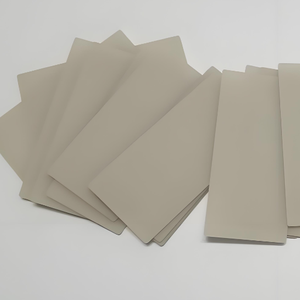
(Aluminum Nitride Ceramic Substrates)
Aluminum nitride (AlN) is a broad bandgap semiconductor ceramic with a hexagonal wurtzite crystal structure, composed of alternating layers of aluminum and nitrogen atoms adhered via solid covalent interactions.
This robust atomic setup endows AlN with exceptional thermal stability, keeping structural integrity approximately 2200 ° C in inert environments and standing up to decay under extreme thermal biking.
Unlike alumina (Al ₂ O FOUR), AlN is chemically inert to thaw steels and numerous responsive gases, making it appropriate for severe environments such as semiconductor processing chambers and high-temperature heaters.
Its high resistance to oxidation– developing just a thin safety Al two O two layer at surface upon direct exposure to air– makes certain long-lasting reliability without substantial degradation of bulk buildings.
Additionally, AlN shows excellent electric insulation with a resistivity going beyond 10 ¹⁴ Ω · centimeters and a dielectric toughness above 30 kV/mm, crucial for high-voltage applications.
1.2 Thermal Conductivity and Electronic Features
One of the most defining attribute of light weight aluminum nitride is its outstanding thermal conductivity, typically varying from 140 to 180 W/(m · K )for commercial-grade substrates– over five times higher than that of alumina (≈ 30 W/(m · K)).
This efficiency stems from the reduced atomic mass of nitrogen and light weight aluminum, combined with solid bonding and minimal point issues, which enable effective phonon transport with the latticework.
However, oxygen pollutants are particularly damaging; also trace amounts (above 100 ppm) alternative to nitrogen sites, creating light weight aluminum openings and spreading phonons, thereby substantially reducing thermal conductivity.
High-purity AlN powders manufactured via carbothermal reduction or direct nitridation are important to accomplish optimal warmth dissipation.
Regardless of being an electric insulator, AlN’s piezoelectric and pyroelectric residential properties make it valuable in sensors and acoustic wave gadgets, while its vast bandgap (~ 6.2 eV) supports operation in high-power and high-frequency digital systems.
2. Manufacture Procedures and Production Challenges
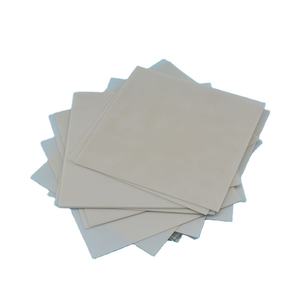
( Aluminum Nitride Ceramic Substrates)
2.1 Powder Synthesis and Sintering Methods
Producing high-performance AlN substratums starts with the synthesis of ultra-fine, high-purity powder, typically accomplished with responses such as Al ₂ O FOUR + 3C + N ₂ → 2AlN + 3CO (carbothermal reduction) or straight nitridation of aluminum metal: 2Al + N TWO → 2AlN.
The resulting powder must be carefully grated and doped with sintering aids like Y TWO O FIVE, CaO, or rare planet oxides to advertise densification at temperature levels in between 1700 ° C and 1900 ° C under nitrogen ambience.
These additives create short-term fluid stages that boost grain border diffusion, making it possible for complete densification (> 99% academic density) while reducing oxygen contamination.
Post-sintering annealing in carbon-rich atmospheres can better decrease oxygen web content by eliminating intergranular oxides, thus recovering peak thermal conductivity.
Attaining consistent microstructure with regulated grain dimension is crucial to stabilize mechanical toughness, thermal performance, and manufacturability.
2.2 Substrate Forming and Metallization
When sintered, AlN ceramics are precision-ground and washed to fulfill limited dimensional resistances needed for electronic product packaging, typically down to micrometer-level monotony.
Through-hole boring, laser cutting, and surface patterning allow assimilation right into multilayer packages and hybrid circuits.
An important step in substratum fabrication is metallization– the application of conductive layers (usually tungsten, molybdenum, or copper) by means of processes such as thick-film printing, thin-film sputtering, or direct bonding of copper (DBC).
For DBC, copper aluminum foils are bonded to AlN surface areas at elevated temperatures in a controlled ambience, forming a strong user interface ideal for high-current applications.
Alternative strategies like energetic steel brazing (AMB) use titanium-containing solders to improve adhesion and thermal fatigue resistance, especially under duplicated power biking.
Proper interfacial design guarantees low thermal resistance and high mechanical integrity in running tools.
3. Performance Advantages in Electronic Equipment
3.1 Thermal Management in Power Electronic Devices
AlN substrates master taking care of heat generated by high-power semiconductor gadgets such as IGBTs, MOSFETs, and RF amplifiers made use of in electric lorries, renewable resource inverters, and telecommunications facilities.
Reliable warm removal avoids localized hotspots, decreases thermal stress, and prolongs tool lifetime by alleviating electromigration and delamination dangers.
Compared to traditional Al two O ₃ substrates, AlN makes it possible for smaller sized plan sizes and higher power thickness due to its superior thermal conductivity, permitting developers to push efficiency borders without jeopardizing dependability.
In LED illumination and laser diodes, where junction temperature level straight impacts efficiency and color stability, AlN substratums substantially enhance luminous output and functional lifespan.
Its coefficient of thermal growth (CTE ≈ 4.5 ppm/K) additionally very closely matches that of silicon (3.5– 4 ppm/K) and gallium nitride (GaN, ~ 5.6 ppm/K), minimizing thermo-mechanical stress during thermal biking.
3.2 Electrical and Mechanical Dependability
Beyond thermal performance, AlN uses reduced dielectric loss (tan δ < 0.0005) and secure permittivity (εᵣ ≈ 8.9) throughout a broad regularity range, making it excellent for high-frequency microwave and millimeter-wave circuits.
Its hermetic nature protects against moisture ingress, eliminating rust threats in humid atmospheres– an essential benefit over natural substrates.
Mechanically, AlN possesses high flexural stamina (300– 400 MPa) and solidity (HV ≈ 1200), guaranteeing durability during handling, assembly, and area operation.
These qualities collectively contribute to enhanced system dependability, reduced failing prices, and reduced total expense of ownership in mission-critical applications.
4. Applications and Future Technological Frontiers
4.1 Industrial, Automotive, and Defense Equipments
AlN ceramic substrates are currently typical in innovative power components for commercial motor drives, wind and solar inverters, and onboard battery chargers in electric and hybrid automobiles.
In aerospace and defense, they sustain radar systems, digital warfare units, and satellite communications, where efficiency under severe conditions is non-negotiable.
Medical imaging tools, including X-ray generators and MRI systems, additionally gain from AlN’s radiation resistance and signal stability.
As electrification trends accelerate throughout transportation and energy sectors, need for AlN substrates remains to grow, driven by the requirement for portable, reliable, and reputable power electronic devices.
4.2 Arising Combination and Lasting Advancement
Future developments focus on incorporating AlN into three-dimensional product packaging styles, ingrained passive parts, and heterogeneous assimilation systems integrating Si, SiC, and GaN gadgets.
Research into nanostructured AlN movies and single-crystal substratums intends to further boost thermal conductivity toward theoretical restrictions (> 300 W/(m · K)) for next-generation quantum and optoelectronic devices.
Initiatives to minimize manufacturing expenses through scalable powder synthesis, additive manufacturing of intricate ceramic structures, and recycling of scrap AlN are getting momentum to improve sustainability.
Furthermore, modeling tools using limited aspect analysis (FEA) and artificial intelligence are being employed to enhance substrate layout for particular thermal and electrical lots.
To conclude, aluminum nitride ceramic substrates represent a foundation innovation in contemporary electronic devices, uniquely connecting the void in between electric insulation and remarkable thermal conduction.
Their role in making it possible for high-efficiency, high-reliability power systems highlights their tactical importance in the ongoing development of electronic and power innovations.
5. Supplier
Advanced Ceramics founded on October 17, 2012, is a high-tech enterprise committed to the research and development, production, processing, sales and technical services of ceramic relative materials and products. Our products includes but not limited to Boron Carbide Ceramic Products, Boron Nitride Ceramic Products, Silicon Carbide Ceramic Products, Silicon Nitride Ceramic Products, Zirconium Dioxide Ceramic Products, etc. If you are interested, please feel free to contact us.
Tags: Aluminum Nitride Ceramic Substrates, aluminum nitride ceramic, aln aluminium nitride
All articles and pictures are from the Internet. If there are any copyright issues, please contact us in time to delete.
Inquiry us