 By admin
1. Make-up and Hydration Chemistry of Calcium Aluminate Concrete
1.1 Key Phases and Raw Material Resources
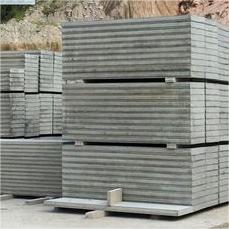
(Calcium Aluminate Concrete)
Calcium aluminate concrete (CAC) is a specific building material based upon calcium aluminate concrete (CAC), which varies basically from normal Portland concrete (OPC) in both composition and efficiency.
The main binding stage in CAC is monocalcium aluminate (CaO · Al ₂ O Two or CA), typically comprising 40– 60% of the clinker, along with other stages such as dodecacalcium hepta-aluminate (C ₁₂ A ₇), calcium dialuminate (CA ₂), and small quantities of tetracalcium trialuminate sulfate (C FOUR AS).
These phases are generated by merging high-purity bauxite (aluminum-rich ore) and limestone in electric arc or rotary kilns at temperature levels between 1300 ° C and 1600 ° C, leading to a clinker that is consequently ground right into a great powder.
Making use of bauxite ensures a high light weight aluminum oxide (Al two O FIVE) web content– typically in between 35% and 80%– which is vital for the material’s refractory and chemical resistance buildings.
Unlike OPC, which relies on calcium silicate hydrates (C-S-H) for stamina growth, CAC gains its mechanical buildings with the hydration of calcium aluminate stages, developing an unique set of hydrates with exceptional efficiency in hostile atmospheres.
1.2 Hydration Mechanism and Toughness Growth
The hydration of calcium aluminate cement is a facility, temperature-sensitive process that leads to the formation of metastable and secure hydrates gradually.
At temperatures listed below 20 ° C, CA moisturizes to create CAH ₁₀ (calcium aluminate decahydrate) and C TWO AH EIGHT (dicalcium aluminate octahydrate), which are metastable stages that provide fast early stamina– usually attaining 50 MPa within 24 hours.
Nevertheless, at temperature levels above 25– 30 ° C, these metastable hydrates undertake a transformation to the thermodynamically stable phase, C TWO AH ₆ (hydrogarnet), and amorphous aluminum hydroxide (AH FIVE), a procedure referred to as conversion.
This conversion reduces the strong quantity of the hydrated stages, raising porosity and possibly compromising the concrete otherwise effectively handled during curing and service.
The price and degree of conversion are affected by water-to-cement ratio, healing temperature level, and the existence of additives such as silica fume or microsilica, which can mitigate toughness loss by refining pore structure and advertising second responses.
Regardless of the threat of conversion, the rapid stamina gain and very early demolding ability make CAC perfect for precast aspects and emergency situation fixings in commercial setups.
( Calcium Aluminate Concrete)
2. Physical and Mechanical Characteristics Under Extreme Conditions
2.1 High-Temperature Performance and Refractoriness
Among one of the most defining attributes of calcium aluminate concrete is its ability to withstand severe thermal problems, making it a recommended selection for refractory linings in industrial furnaces, kilns, and incinerators.
When heated, CAC undergoes a collection of dehydration and sintering reactions: hydrates break down between 100 ° C and 300 ° C, complied with by the formation of intermediate crystalline phases such as CA ₂ and melilite (gehlenite) above 1000 ° C.
At temperature levels exceeding 1300 ° C, a thick ceramic structure types through liquid-phase sintering, leading to significant stamina healing and quantity security.
This behavior contrasts greatly with OPC-based concrete, which usually spalls or degenerates over 300 ° C as a result of heavy steam pressure accumulation and decay of C-S-H phases.
CAC-based concretes can sustain continual solution temperatures as much as 1400 ° C, relying on accumulation kind and formulation, and are usually used in combination with refractory aggregates like calcined bauxite, chamotte, or mullite to enhance thermal shock resistance.
2.2 Resistance to Chemical Attack and Rust
Calcium aluminate concrete shows phenomenal resistance to a variety of chemical atmospheres, specifically acidic and sulfate-rich problems where OPC would rapidly weaken.
The moisturized aluminate phases are more stable in low-pH atmospheres, enabling CAC to stand up to acid strike from sources such as sulfuric, hydrochloric, and natural acids– usual in wastewater therapy plants, chemical processing facilities, and mining operations.
It is also very resistant to sulfate strike, a major cause of OPC concrete deterioration in dirts and marine settings, due to the lack of calcium hydroxide (portlandite) and ettringite-forming stages.
On top of that, CAC shows low solubility in seawater and resistance to chloride ion infiltration, reducing the danger of support deterioration in aggressive aquatic setups.
These residential or commercial properties make it suitable for linings in biogas digesters, pulp and paper market tanks, and flue gas desulfurization devices where both chemical and thermal stress and anxieties are present.
3. Microstructure and Longevity Attributes
3.1 Pore Structure and Leaks In The Structure
The sturdiness of calcium aluminate concrete is very closely linked to its microstructure, especially its pore size circulation and connection.
Freshly hydrated CAC exhibits a finer pore framework compared to OPC, with gel pores and capillary pores adding to reduced leaks in the structure and enhanced resistance to hostile ion ingress.
Nonetheless, as conversion proceeds, the coarsening of pore framework as a result of the densification of C THREE AH ₆ can raise permeability if the concrete is not effectively cured or safeguarded.
The enhancement of reactive aluminosilicate materials, such as fly ash or metakaolin, can enhance long-lasting resilience by taking in cost-free lime and developing auxiliary calcium aluminosilicate hydrate (C-A-S-H) phases that refine the microstructure.
Proper curing– particularly moist healing at regulated temperatures– is necessary to delay conversion and enable the development of a thick, impermeable matrix.
3.2 Thermal Shock and Spalling Resistance
Thermal shock resistance is an essential performance metric for products utilized in cyclic home heating and cooling down settings.
Calcium aluminate concrete, especially when created with low-cement content and high refractory aggregate volume, shows exceptional resistance to thermal spalling as a result of its reduced coefficient of thermal growth and high thermal conductivity relative to other refractory concretes.
The visibility of microcracks and interconnected porosity allows for anxiety leisure during rapid temperature level adjustments, preventing tragic crack.
Fiber reinforcement– using steel, polypropylene, or lava fibers– additional boosts toughness and crack resistance, specifically throughout the preliminary heat-up stage of industrial linings.
These attributes make certain lengthy service life in applications such as ladle cellular linings in steelmaking, rotating kilns in cement production, and petrochemical crackers.
4. Industrial Applications and Future Growth Trends
4.1 Trick Markets and Architectural Uses
Calcium aluminate concrete is crucial in markets where traditional concrete stops working as a result of thermal or chemical exposure.
In the steel and shop markets, it is used for monolithic linings in ladles, tundishes, and soaking pits, where it withstands molten metal contact and thermal biking.
In waste incineration plants, CAC-based refractory castables secure central heating boiler walls from acidic flue gases and unpleasant fly ash at elevated temperature levels.
Local wastewater framework utilizes CAC for manholes, pump terminals, and sewer pipes exposed to biogenic sulfuric acid, significantly expanding life span contrasted to OPC.
It is additionally utilized in quick repair work systems for freeways, bridges, and flight terminal runways, where its fast-setting nature allows for same-day reopening to website traffic.
4.2 Sustainability and Advanced Formulations
Despite its performance advantages, the production of calcium aluminate concrete is energy-intensive and has a greater carbon footprint than OPC because of high-temperature clinkering.
Recurring research study concentrates on decreasing environmental influence through partial replacement with commercial byproducts, such as aluminum dross or slag, and maximizing kiln performance.
New solutions incorporating nanomaterials, such as nano-alumina or carbon nanotubes, objective to boost very early strength, reduce conversion-related degradation, and extend solution temperature restrictions.
Furthermore, the development of low-cement and ultra-low-cement refractory castables (ULCCs) boosts thickness, strength, and sturdiness by reducing the quantity of reactive matrix while maximizing aggregate interlock.
As industrial procedures need ever before extra resilient products, calcium aluminate concrete remains to progress as a foundation of high-performance, resilient building and construction in one of the most tough settings.
In summary, calcium aluminate concrete combines fast stamina growth, high-temperature security, and exceptional chemical resistance, making it a critical material for facilities subjected to extreme thermal and harsh conditions.
Its unique hydration chemistry and microstructural evolution need careful handling and style, yet when appropriately used, it provides unparalleled resilience and safety and security in commercial applications around the world.
5. Distributor
Cabr-Concrete is a supplier under TRUNNANO of Calcium Aluminate Cement with over 12 years of experience in nano-building energy conservation and nanotechnology development. It accepts payment via Credit Card, T/T, West Union and Paypal. TRUNNANO will ship the goods to customers overseas through FedEx, DHL, by air, or by sea. If you are looking for aluminate cement, please feel free to contact us and send an inquiry. (
Tags: calcium aluminate,calcium aluminate,aluminate cement
All articles and pictures are from the Internet. If there are any copyright issues, please contact us in time to delete.
Inquiry us